Tea leaf quality
classification.
8 minutes, not 80.
The TLCM automates fine vs. coarse tea leaf discrimination using deep learning and a custom-built electromechanical sorting pipeline — achieving sub-3% error at 10× the speed of manual counting.
Product Overview Video
Understanding the TLCM.
A comprehensive overview explaining the Tea Leaf Classifier Machine, its core engineering mission, and AI-driven quality grading.
Hardware Pipeline
Five modules. One continuous sorting pipeline.
A compact, portable, four-chamber metal-clad panel housing the complete electromechanical and AI processing pipeline. Leaves travel from manual input to classified output in approximately 4 minutes per 1 kg batch.
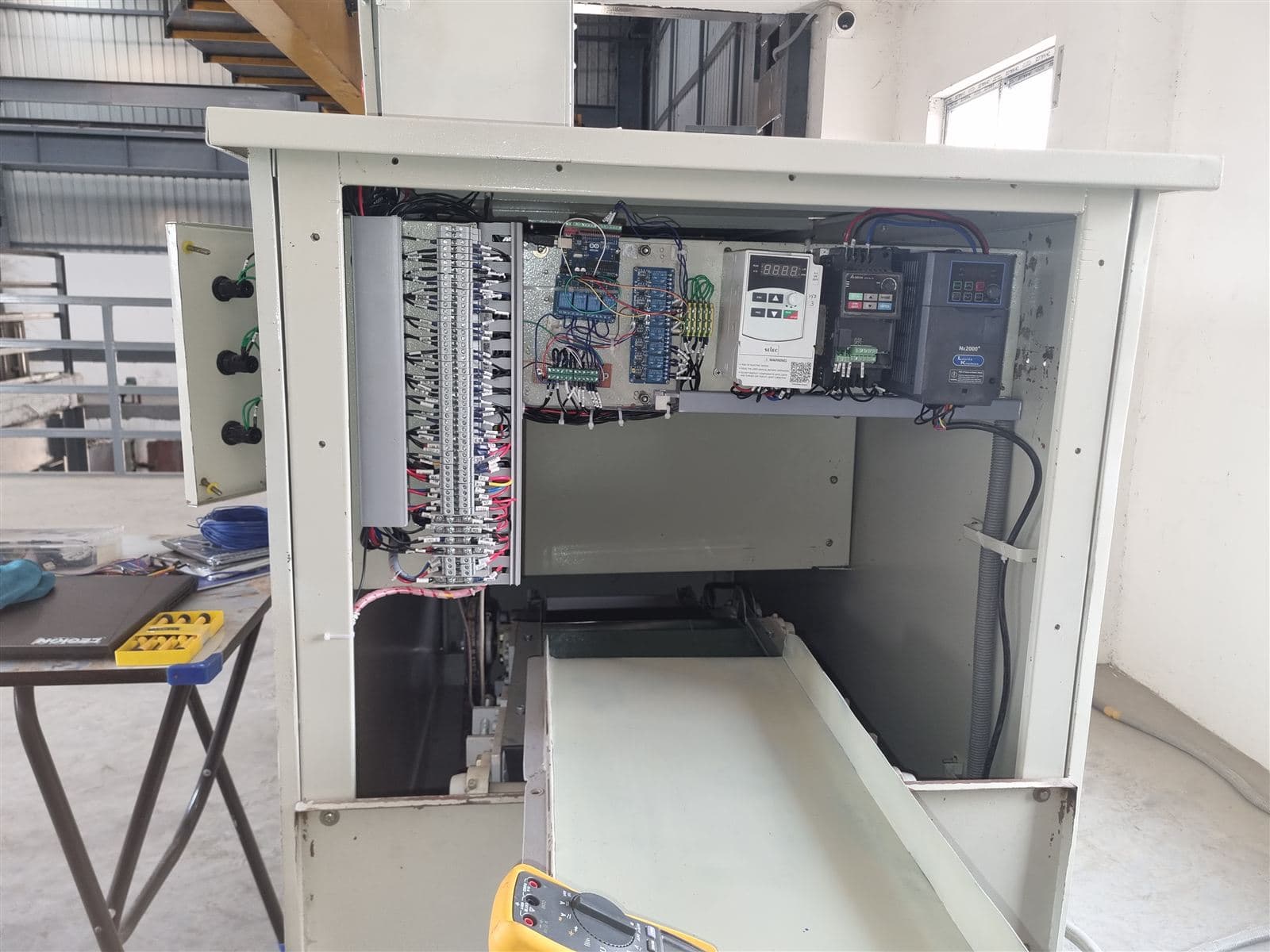
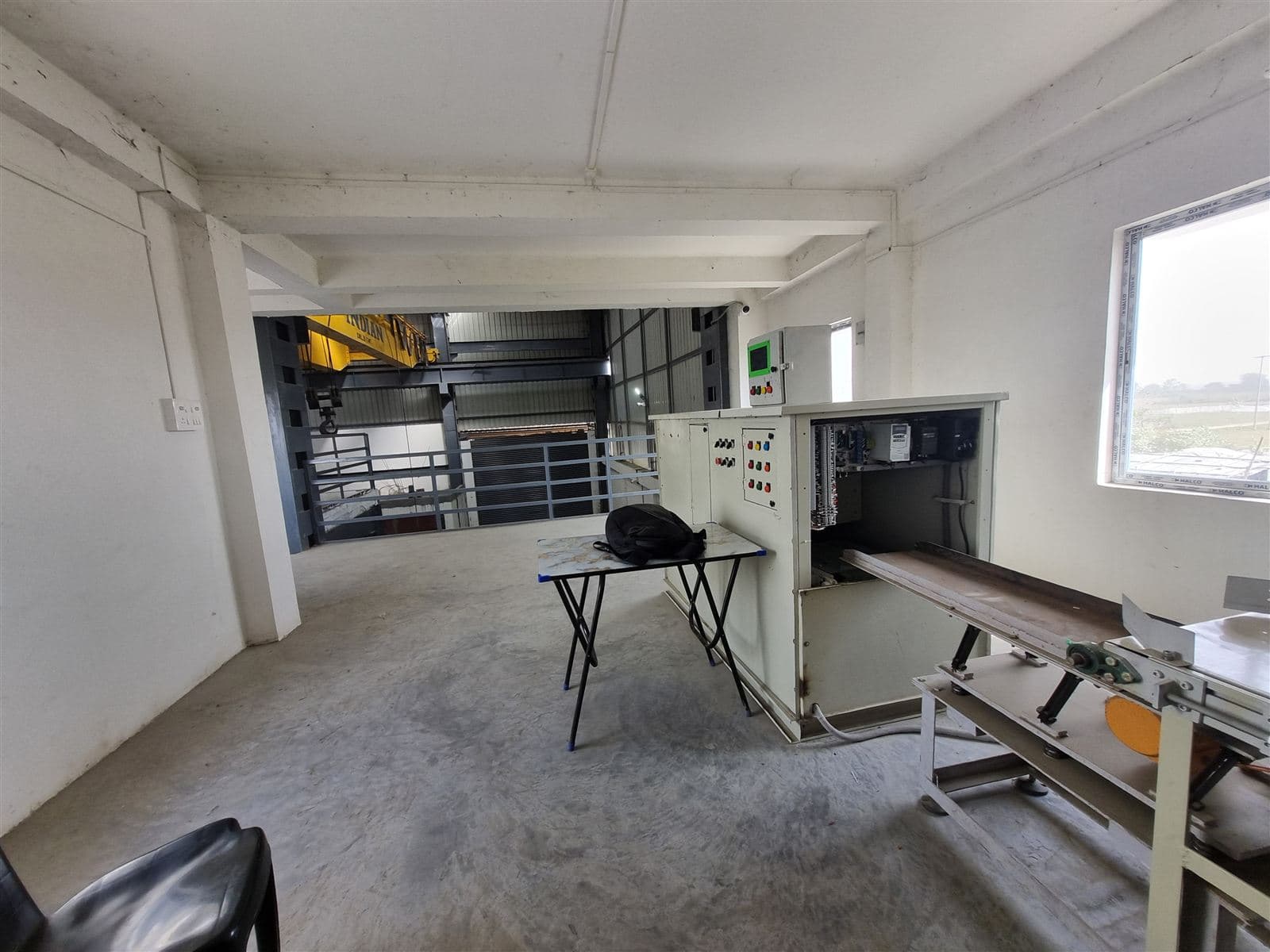
Instrument Chamber & MCC
Housing 3× VFDs, Arduino Uno, relay boards & SMPS
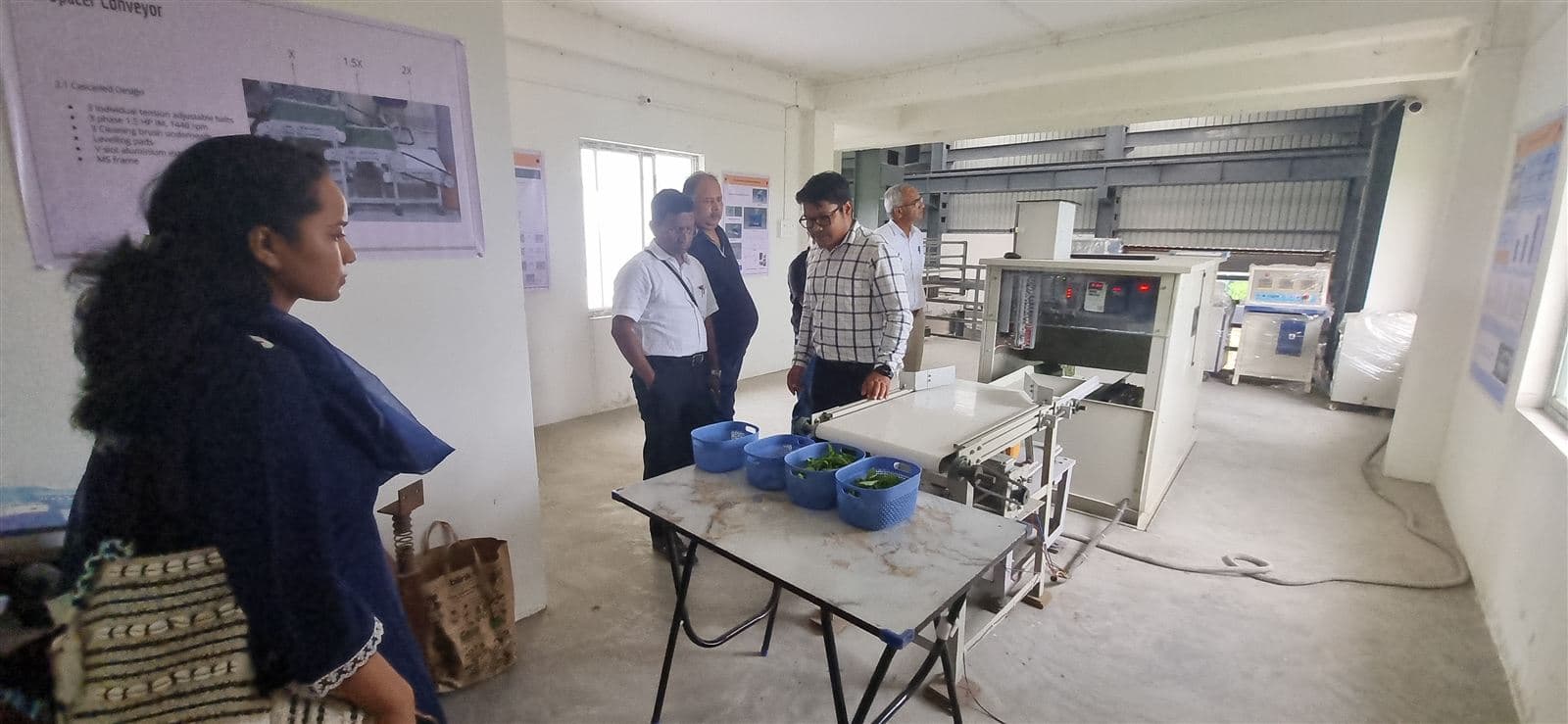
Feed & Conveyor Subsystem
Regulated feed belt, vibratory feeder & 3-stage spacer conveyor
Feed Control Belt
FCB1 HP · 3-phase induction motor
Fresh tea leaves are manually loaded onto this flat belt conveyor. Regulates flow, de-entangles clusters, and prevents mechanical damage to delicate leaves. Integrated position limiters control the exact drop point.
Linear Vibratory Feeder
LVF0.5 HP vibration motor · Dampener springs
Receives leaves from the FCB. Custom-tuned dampener springs and controlled linear vibrations flatten the leaf heap into approximately a single, uniform layer — critical for accurate individual leaf detection.
Spacer Conveyor
SC1.5 HP · Three belts · Speed ratio 1:1.5:2
Three cascaded belts running at 5 m/s → 7.5 m/s → 10 m/s. Progressive speed gradient causes consecutive leaves to accelerate slightly at each transfer, creating essential gaps to prevent crowding under the camera. White PVC belts contrast with green leaves.
Illumination Chamber
ILL1000 Lm · 6500 K · 60 FPS HD camera
Positioned above the third conveyor where leaf separation is highest. A 36 VDC battery-powered LED panel eliminates AC stroboscopic flicker. A 60 FPS HD USB camera captures every leaf at consistent, controlled lighting.
Processing Chamber
AIi5-12400F · RTX 3060 12 GB · Custom Detection Model
Air-cooled chamber running real-time inference with a custom-trained object detection model. A 1 KVA online UPS ensures uninterrupted operation. The PyGame HMI displays live classification results, counts, and quality statistics as leaves pass through.
Detection Module
Custom object detection model trained to distinguish 9 leaf classes.
The model identifies four categories of fine (high-value) leaves and five categories of coarse or non-target items — including overlapping leaves and diseased material.
Model Evolution
PyOpenAnnotate — Open-Source OpenCV Annotation Tool
To handle the high workload of annotating 41,084 leaf instances, we created and open-sourced PyOpenAnnotate to contribute back to the computer vision community. Available publicly on PyPI at pypi.org/project/PyOpenAnnotate.
Field Trial Results & Extrapolation
Tested on 0.5 kg trial sample & extrapolated for 1 kg batches.
Manual counting results by verified tea graders served as ground truth. Extrapolating baseline trial performance to a standard 1 kg inspection batch demonstrates an 8-minute turn-around compared to 80 minutes for full manual counting and reporting.
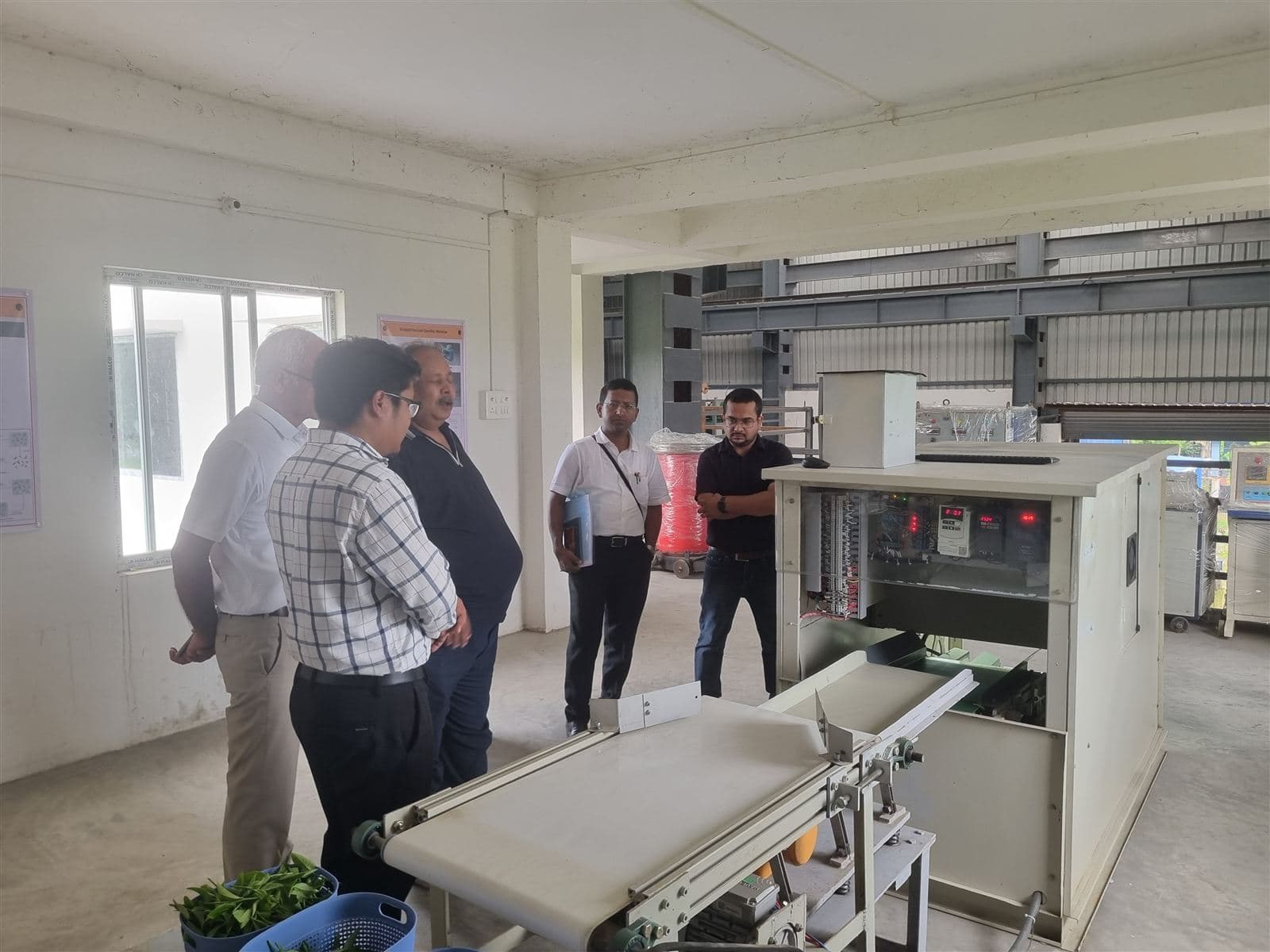
Live Field Trial Demonstration
Evaluating fresh tea leaf samples with certified tea graders & DSIR review committee
Fine Leaf Count (FLC)
58.44%
Processing & Reporting Time
~80 min
32.6 min counting time + full report preparation & verification for 1 kg
Consistency (Banjhi)
σ = 2.95 (lower is better)
Fine Leaf Count (FLC)
56.79%
2.82% error vs. ground truth
Processing & Reporting Time
~8 min
4.1 min automated sorting + HMI report generation (10× faster)
Consistency (Banjhi)
σ = 10.07 (known limitation, under active improvement)
Manual sorting remains marginally more consistent for Banjhi classification. However, the 2.82% error margin is far outweighed by reducing full batch processing from 80 minutes to 8 minutes — making the TLCM a game-changer for commercial tea factories where throughput, standardization, and rapid report generation matter most.
Technical Specifications
Complete hardware specification.
| Category | Component | Specification |
|---|---|---|
| Compute | Processor | Intel Core i5-12400F |
| Compute | GPU | NVIDIA GeForce RTX 3060 12 GB |
| Compute | UPS | 1 KVA Online UPS |
| Vision | Camera | 60 FPS HD USB Camera |
| Vision | Illumination | 1000 Lm · 6500 K LED Panel (36 VDC) |
| Mechanical | FCB Motor | 1 HP · 3-phase Induction |
| Mechanical | LVF Motor | 0.5 HP Vibration Motor |
| Mechanical | Conveyor | 1.5 HP · 3-belt · 5→10 m/s |
| Control | Drives | 3× Variable Frequency Drives (VFDs) |
| Control | Microcontroller | Arduino Uno |
| Control | Protection | Numerical Relay — Under/Over-voltage, Overload, Phase |
| Control | Power Supply | 5V 10A SMPS |
Recognition & Background
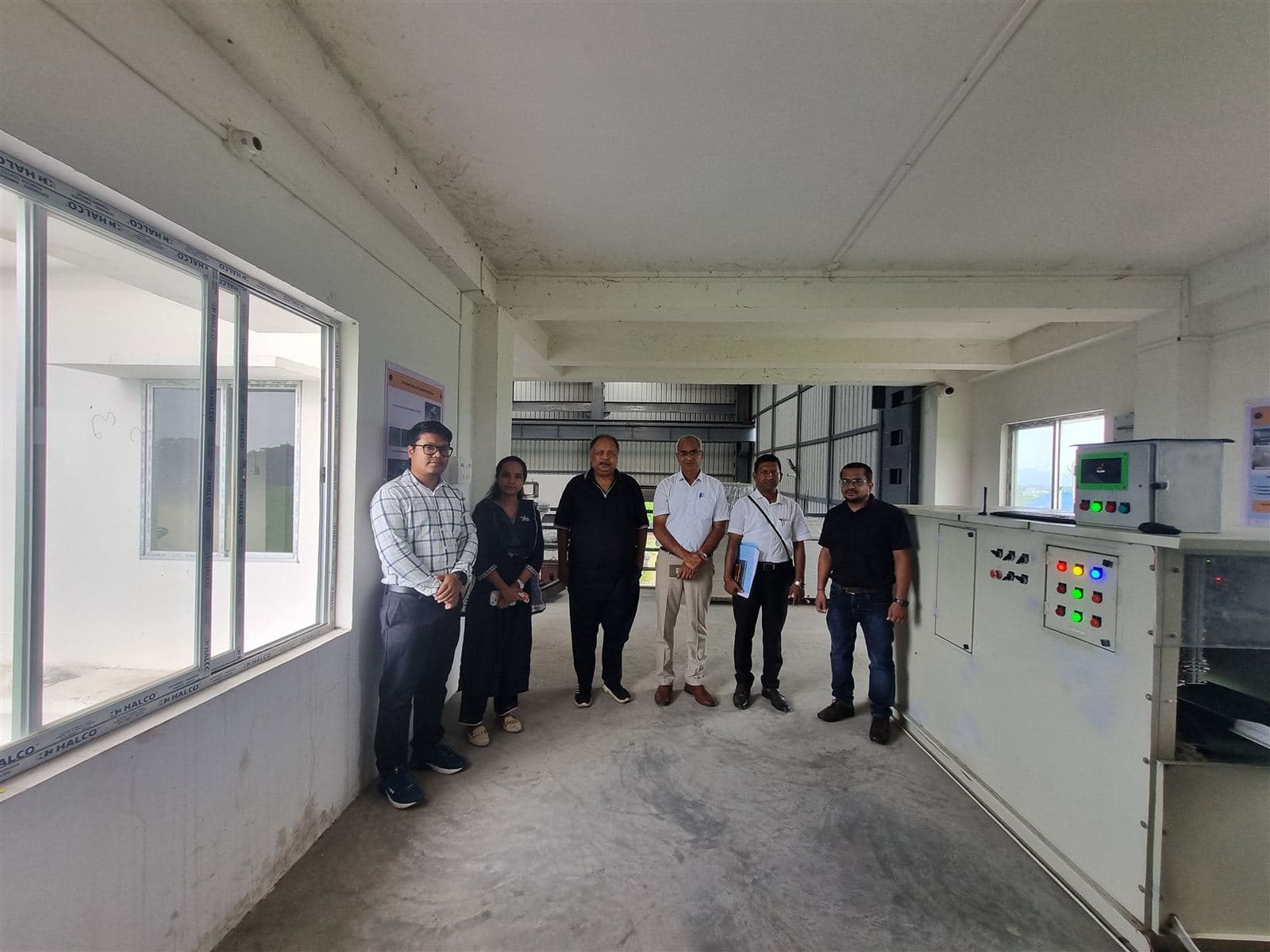
Project Evaluation & Review
Innovator Kukil Kashyap Borgohain & project team alongside the DSIR PRISM evaluation committee
Funded by DSIR, PRISM
Funded & supported under DSIR PRISM Phase I, Department of Scientific and Industrial Research, Govt. of India.
Top 50 — DSIR PRISM
Recognised in the Top 50 PRISM Projects (2015–2025) by DSIR, Govt. of India.
Open-Source Tool
PyOpenAnnotate created and released on PyPI to contribute back to the open-source CV community.
Field Tested in Assam
Extensively tested in commercial tea estate environments with certified industry tea graders.
Bring TLCM to your factory.
Suitable for commercial tea factories, research institutions, and quality control labs. Get in touch to discuss deployment, customisation, or technical collaboration.
DSIR PRISM Phase I · Government of India. © 2026 Kukil Kashyap Borgohain.